 I am a recovering addict.
No, not from any drugs or alcohol, but from a game that was tailor-made for me.
Fantasy football became one of my biggest obsessions over the past 5 years. I’ve thankfully reached the point now where my interest in the game doesn’t completely dominate my time and focus, but the start of each season still brings a level of excitement that few other hobbies can match.
Now why do I say this game was tailor-made for me?
Well, it’s not because I love football itself. I think the sport makes for decent entertainment, but basketball will always be my preferred passion.
The reason I love fantasy football, however, is because it transforms the sport into a statistician’s philosophical playground. The game is about using real-world data and probability to forecast outcomes and make wise decisions.
To an engineer with a statistical background, it’s a match made in heaven. And to a writer who specializes in improvement strategy and practical wisdom, it’s even more.
One thing you quickly notice playing fantasy is that its lessons extend far beyond the football season. The way it forces you to think about risk management, opportunity cost, and other practical concepts benefits players year-round.
You’ll surprisingly learn a lot about life while playing fantasy football.
Here are 6 of the biggest life lessons you’ll learn by playing this game.
6 Life Lessons You’ll Surprisingly Learn from Fantasy Football
Lesson 1: Productive People Are the Most Likely to Be Productive
“Thanks, captain obvious…”
I know you said that under your breath.
While the lesson above may seem self-evident, you’d be surprised how often people ignore that truth.
Every fantasy season, there’s a talented rookie, a solid running back who switched teams, or a wide receiver who ended last year on a hot streak who gets hyped as the next big thing. Players like this surge to the top of draft boards as “can’t-miss” picks for fantasy managers choosing their rosters, but while these players occasionally reward you with production that matches the hype, their stats are often a far cry from what their Youtube highlights suggest.
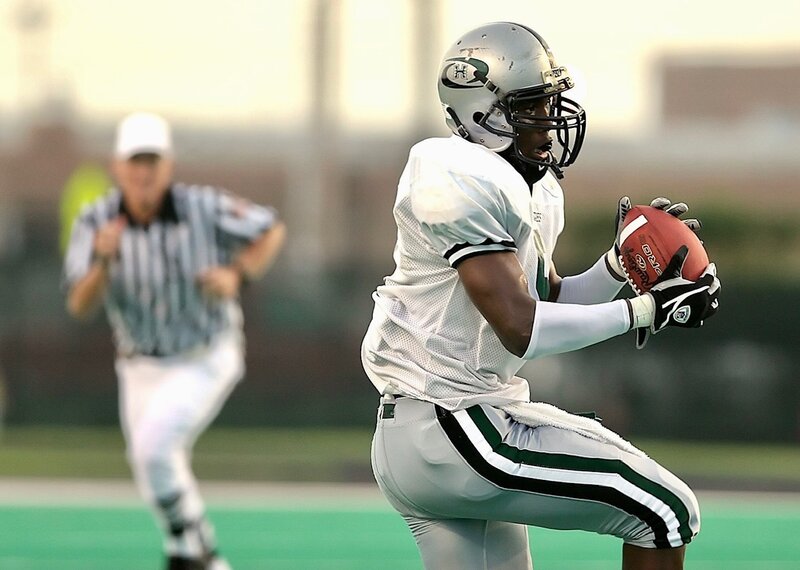
It’s not wise to spend a high pick on a player whose numbers are mostly projected. It’s too risky to pass up great players early whose insane stats are the norm.
The most productive players in fantasy are almost always those who produced for at least one full season before. Guys like that don’t have to hit their best-case scenario to be worth the investment. They’ve already proven they can put up league-winning numbers in their sleep.
Likewise, the same story is true about real-life productivity.
Everyone wants to be seen as a talented and valuable worker, but most of us lack the track record of someone you’d expect to perform.
You have to build the mindset and habits to produce long before others see how valuable your work is.
People don’t like risk. They don’t like investing in things or people who might embarrass them later. That’s why you need to ignore the outside noise and become a productive human no matter what.
Once you get used to bringing others value, your momentum will keep you going forward. And soon, you won’t be seen as a prospect with potential. You’ll be the “can’t-miss” choice everyone would love to have.
Lesson 2: No One Is Confined to Their Initial Path
The odds of winning a fantasy title on draft day are very different than the odds at the start of the playoffs.
Future outcomes may seem obvious in the beginning, but a lot can change over the course of four months:
- The team loaded with stud players might lose them all due to injury.
- Finding a hidden gem on the waiver wire may turn your season around.
- A crafty mid-year trade can lock down a playoff spot you swore was out of reach.
Good fantasy managers know to stay engaged no matter how bad things look in the present. They know it only takes one opportunity to transform their outlook.
Plenty fantasy veterans can tell stories of how their 0-3 September teams became 9-5 juggernauts by December, but that would’ve never happened if they gave up.
The same lesson applies to real life.
Not everyone comes from a great family, or a good school, or a trauma-free background. What really matters though is what you do going forward.
Life is too dynamic for you to ever feel like you’re stuck in one place. You can always reinvent yourself. You can still redefine priorities no matter how old you are.
“The way things are now is not how they will always be.”
We all have choices and opportunities available that can help us overcome the odds. So keep making those right choices even if results don’t show in the present. That’s the only way you’ll have a chance of escaping a hole.
Lesson 3: Success Is More Predictable Than You Think
When you draft a player in fantasy, you don’t just pick someone to join your team—you attach yourself to the football equivalent of a worldview.
Smart drafters know this. That’s why they work backwards from the coaching staff, offensive philosophy, and team environment to determine who they choose.
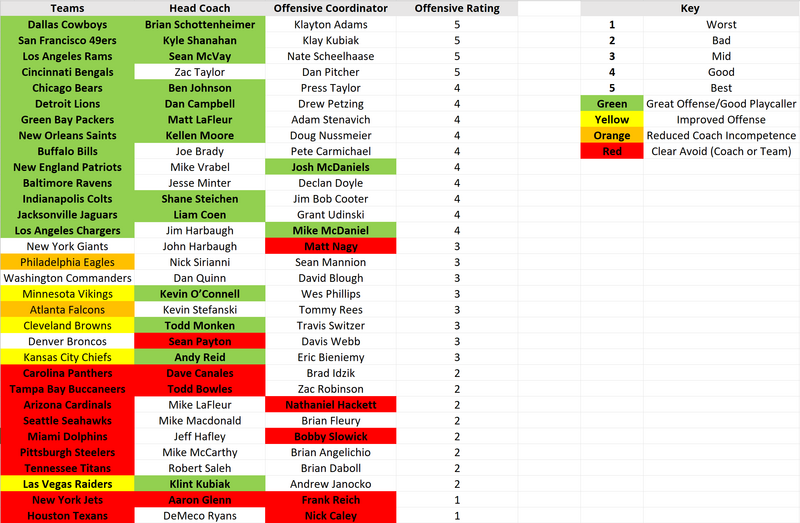
Success in football is very dependent on strategy and effective schemes. Those high-level plans help offenses create easy looks and score more points, and in doing so, they let individual players maximize their production.
Picking players from teams that use good on-field strategy is one of the best ways to succeed in fantasy. Even the most talented football players struggle when they’re in bad coaching environments. Talented players in great systems, however, put up the best numbers of their career.
Working backwards like this is a great move because good coaching is fairly predictable. No one gets a coaching job in professional sports without displaying some level of competence, but among all head coaches and play-callers, there’s a subset of them who truly “know ball”.
These coaches have good reputations because they train their teams to consistently perform well, so choosing their players will most likely bring fantasy success.
In the same vein, many aspects of life are also more predictable than you think.
Sure, chance and luck can ruin even the best laid plans, but the truth is, there’s good and bad strategy to everything.
Whether it’s weight loss, gaming, investing, or another interest, consistently good outcomes are the result of objectively good decisions. That’s why we should strive for understanding instead of chasing good results.
Once we get wise enough to think rightly at a high-level, the numbers will almost always be in our favor.
Lesson 4: Misfortune Is a Feature, Not a Bug
 “Are injuries worse this year?!?!”
That question always arises about a month into the season.
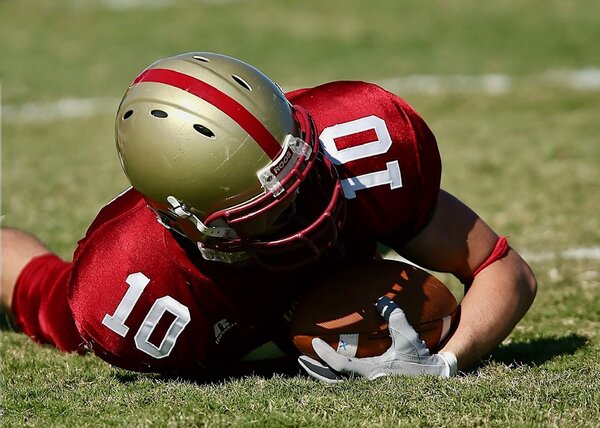
Football is a violent sport. Players get nasty injuries that set them back months and even years. It’s just an expected part of the game.
Injury is a possible outcome you have to prepare for, and smart fantasy managers do exactly that.
Sometimes they grab the backup for the running back they picked first overall. Sometimes they avoid skilled players who seem to always get banged up every year.
Injuries—and the production drop-off they typically bring—are realistic worst-case scenarios. It doesn’t help your fantasy team to complain about this misfortune that inevitably comes though. You need to plan for it and work around it to give yourself the best chance to succeed.
I’ve noticed that managers who navigate misfortune this way are also the ones most adept at handling it in real life.
They know how to stay disciplined when things don’t go their way, they know how to plan for their worst-case outcomes, and they reject a “woe-is-me” attitude when bad luck eventually hits.
People like this know uncertainty is one of the biggest certainties in life. Instead of lamenting that fact and the troubles they face, however, wise people do their best to solve problems proactively and outlast the misfortune that comes.
Lesson 5: Refusing to Take Risks is Risky
 One of the biggest traps in fantasy is a mediocre player who gets reps because his team apparently has no other option.
Managers pick players like this later in drafts because they want safe and consistent production. The problem with thinking this way though is that it ignores the formula for fantasy success:
Fantasy Football Success = Talent + Opportunity
The player above may have the opportunity to succeed, but because he lacks the talent to be successful, he’ll not only disappoint in fantasy, but his team will likely reduce his opportunity in the coming weeks.
Football teams make trades. They move players around on depth charts too. If a player in a starting role isn’t good enough, he will eventually get replaced. Then, what looked like a safe fantasy pick at the start of the season will be a wasted spot on your roster.
The better approach to picking late in drafts is to choose talented players who lack opportunity. Look at the rookie running back who’s behind a veteran on his team’s depth chart. Or maybe choose the talented wide receiver who’s overshadowed by his all-pro teammate.
Players like those can’t produce for you immediately, but they’re the ones who have tons of potential.
The talent side of the formula above is much harder to change than opportunity. People don’t become talented players overnight, but the guy in front of them can get hurt at any moment.
Opportunity changes all the time. That’s why you have to take risks for upside both in fantasy and in life.
So go talk to your boss about that promotion you deserve. Ask out your crush if you know she’s available. Put your work out there publicly for the internet to see too.
Yes, there will always be risk associated with those actions, but you’ll miss out on great upside if even the middle-case scenario comes true.
Lesson 6: There’s Joy in More Than Just Good Results
 No matter if my season ends in a championship or in the toilet bowl, a week later I’m thinking, “I miss fantasy”.
While I do play for small prizes and bragging rights, the truth is, I’m a sicko who mostly plays for the love of the game.
So many managers make themselves miserable trying to win championships no one will care about in a week, but that’s not a fun way to experience fantasy.
You gotta learn to laugh it off when your tight end drops a wide-open touchdown pass. You should brainstorm funny team names when your whole lineup somehow gets injured. And you should jokingly cry to the group chat when a rival snags your targeted free agent Wednesday morning before you wake up.
There’s joy to be had in fantasy football even if you aren’t winning. It’s up to you to change your perspective so you can find that joy at any time.
There’s too much serious stuff in the world to get mad over a game. And there’s too much gloomy news each day to not enjoy other parts of life.
Win or lose, success or failure, you should still look for happiness in each day. The people who bring the most joy to this world find a way to have fun on the day-to-day grind.
I’ve been guilty of obsessing so much over personal goals that any disappointment destroyed me, but that was a horrible way to live.
There’s nothing wrong with wanting to be successful. There’s nothing bad about wanting to improve either. But don’t let those desires consume you.
I know it’s cliché, but the small things really do matter, so enjoy each step you take to reach a destination. The more you live and the more you play, the more you realize happiness isn’t solely about results.
If you have a mindset that finds joy each day, and if you do the best you can with whatever you got, you’ll always be a champion in fantasy football, and also, in real life.
-Drew
Leave a Reply