 My first engineering textbook in school wasn’t primarily about math, science, or physics…
It was about how you should think.
While the freshman version of me who carried that book to his 8 AM class wasn’t too keen on its contents, the professional I am today knows the importance of “Thinking Like an Engineer”.
Many terms, tools, and techniques I learned years ago may be a distant memory now, but the mindset I formed to succeed in this profession has timeless value. And this mindset has also helped me at my other job.
What’s a Theologineer? And Why Should You Think Like One?
The term “theologineer” describes the mix of two roles I’ve filled for the past decade—a theologian and an engineer. A theologineer sees similarities between those two roles and uses the latter’s mindset to form a rational and effective approach to the Christian faith.
So many religious influences today and throughout history have relied on emotion as a foundation instead. Fear, comfort, acceptance, and love have all driven mainstream religious fervor, yet none of those feelings have any substance without truth.
Contrary to what some people think, Christianity isn’t about using a “sky-daddy” as a stand-in for emotional support. It’s about knowing that real, historical actions have led to real, relevant results.
Theologineers understand this, so they strive to learn and teach the biblical truth that shapes how everything works.
I believe every Christian should approach the faith this same way.
No, I’m not saying we should be emotionless robots, but we can all mature faster by thinking more like an engineer.
So what exactly does that look like in practice?
I’ll show you right now.
Thinking Like a Theologineer: 6 Examples of An Engineer’s Mindset Towards Faith
#1: Theologineers Follow the Designer’s Print
 I’m an engineer who works in manufacturing, so I spend most of my day ensuring all the parts my team makes match a blueprint.
The prints I receive have specifications for every feature on each part. Lengths, widths, angles, threads, and whatever else you can think of are defined by a design engineer who determined what’s needed for the part to work.
It’s a straightforward process in theory—I get instructions on what a part should look like and make sure we follow them—but in practice, a few problems arise.
For one, prints aren’t always easy to read. Even if you learned how to read general prints in school, different companies and customers have various standards and part types, so it can be tough to understand what you’re looking at if you’re not familiar with the sheet in front of you. Design errors and misleading visuals also occur, so you might be doomed even if you follow the instructions to a tee.
One of the best ways to reduce issues like this, however, is to form a relationship with the part’s designer. You can talk to them to understand the print better and learn why the specs are the way they are. Then once you gain comfort with complex prints this way, it becomes much easier to make good parts.
As a theologineer, I basically do the same thing.
God is the designer and His print is the Bible, but unlike at my job, I don’t have to worry about bad design.
Sure, God’s blueprint can be tough to read and understand sometimes, but if you ask Him for help and put in the effort to learn, it becomes much clearer (James 1:5).
The sad fact though is that many “Christians” don’t care for God’s print at all. Its tolerances are more strict than they’d like and following its guidelines doesn’t make sense to them, so they abandon God’s print to make their own goofy parts that’ll never work (Prov. 14:12).
Theologineers know better. They know to “trust in the LORD with all [their] heart and lean not on [their] own understanding” (Prov. 3:5-6 NIV).
Compromising with God’s print is a recipe for disaster. Those foolish enough to abandon His instruction prove they have no love for the Designer at all.
#2: Theologineers Know Small Errors Matter
 Do you know how wide a human hair is?
The average width of a human hair is about 0.003 inches or 0.075 millimeters. It’s an incredibly small measurement that’s tough to see with the human eye, but in my line of work, it’s a huge mistake.
At my job, the width of a human hair is the difference between a part either working as expected, or having its components jam during use, causing a leak in the system, and destroying a fail-safe meant to protect a human being from danger. In other words, the width of a human hair is quite literally the difference between life and death.
The point here is that small errors matter—both in engineering and theology. That’s because these two disciplines are systemic. They’re both built from smaller parts that work together to make a unified whole.
Both fields are fascinating when all the pieces work correctly, but a “small” problem in each system can ruin everything.
Perhaps the most famous historical example of this in theology is the one-letter difference between two Greek words. The terms “homoousious” and “homoiousious” are nearly identical, yet the one little “i”—or iota—makes all the difference between truth and heresy.
The first word, “homoousious” means “the same substance or being”, and it’s rightly used to describe Jesus’ relationship to God the Father as explained in Scripture (John 10:30, John 10:33 NIV, Col. 2:9, Heb. 1:3 NIV). The Bible says Jesus was pre-existent as God before the incarnation and also became fully human after (see John 1:1, Phil. 2:6-7 NIV).
The second word, “homoiousious”, means “similar substance or being”, and it best described the 4th century teaching of a priest named Arius which we now call Arianism.
Arius taught that Jesus was a created being who was similar to God but not divine in the same way. And this error eventually led to the denial of both Arius and his teachings at the Council of Nicaea.
Similar errors today can also threaten our biblical understanding.
Denying “small” things like the virgin birth for example has huge consequences for your faith. If Jesus wasn’t born of a virgin, then the identity and nature of Christ is lowered (see John 6:41-42), previously declared prophecy is void (Matt. 1:22-23, cf. Isaiah 7:14), and both the strength and trustworthiness of God is questionable (Psalm 119:160 ESV).
This example shows that we can’t deny parts of Scripture just because we don’t think they’re significant. We should trust the Designer with their importance so He can teach us even more.
#3: Theologineers Speak in Ways Non-Experts Understand
 Most engineers, including myself, don’t work solely with other engineers.
Some of my colleagues have knowledge so deep it’s intimidating, but I also work with many people who only have a high school degree.
I’m forced to communicate every day with people of different technical understanding, and I have to do so with humility and patience so I don’t rub them the wrong way.
The non-experts I talk to don’t know what they don’t know—people from Supply Chain, Finance, and the shopfloor often present laughably impractical ideas with full confidence because they’re not aware of constraints. It’s my job to bridge the gap between their desires and what’s actually feasible.
This is also a theologineer’s role.
The Apostle Paul described this work as being “all things to all people” (see 1 Cor. 9:22 NIV). Paul used a versatile approach when explaining the Christian message to best reach his various audiences.
If he spoke to the Jews of his day, he appealed to his own education as a Jew and the Scriptures his ethnic brethren were familiar with (see Acts 22:3). And if he spoke to Greeks devoted to their own religious practices, he related their understanding of the divine to the only true God (see Acts 17:22-23 ESV).
As a person who does similar work at his job each day, I understand how important this skill is. I can’t talk to a worker one month removed from high school the same way I talk to a design engineer with a Master’s. I have to understand my audience, meet them at their level, and reason with them respectfully to get my point across. I also need the humility to admit when people who don’t have my expertise are more skilled in some areas than I am.
I know my engineering knowledge doesn’t make me a good accountant for example. It doesn’t make me a good part assembler or a good business manager either. But that’s why we work in teams.
The Church is also made up of its own “team” called the body of Christ (see Rom. 12:4-5, 1 Cor. 12:12 ESV). And no matter what each of us members do, we should remember that we work for the team as a whole.
Sometimes, that means we dumb things down from our perspective and explain concepts we think others should know already. Whatever effort is needed to build a stronger body overall is worth it in the eyes of God.
#4: Theologineers Use Proper Tools for the Job
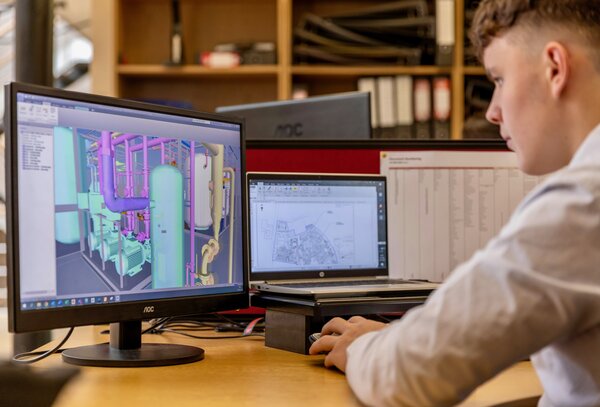 The number of tools available to engineers is nearly as big as the list of problems we’re told to solve. Calipers, drills, reamers, micrometers, thread gages, roundness testers, microscopes, control charts, and statistical software are only a handful of tools I use often to get stuff done.
For most people in this profession, a lack of available tools isn’t what holds them back. It’s their limited knowledge of those tools that hurts the most.
Using calipers to measure precision cuts for example won’t give enough accuracy to make pass-fail decisions. And you can cost your employer tons of hidden dollars if you use drills that aren’t built for machining a specific material.
Good engineers form an intimate knowledge of the tools available so they can do efficient work instead. And a theologineer uses this same advantage.
The Bible has 66 individual books. Each book has a specific purpose and addresses different topics, so you need to be familiar with all of your “sword” to wield it properly (see Eph. 6:17).
You have to read and study Scripture to understand for yourself. Then you can ask the questions below to address problems:
- What biblical passages directly mention this issue?
- Why would a specific verse apply to this problem and why might it not?
- Does it make sense to show an Old Testament example here instead of using one from the New?
A lot of people who spout Scripture make very common mistakes when they apply it. They stretch verses that appear to cover topics indirectly instead of noting passages with clear explanations. Many also turn descriptive narratives into prescriptive instruction for life.
One of the worst recent examples I’ve seen though stems from a misunderstanding of the Bible’s covenants. I was reading an article denying “once saved, always saved” since I like hearing perspectives that differ from my own, and one of the points against the belief was that God removed the Holy Spirit from King Saul in the Old Testament (1 Sam. 16:14; also see David’s plea in Psalm 51:11).
The writer argued that the Holy Spirit’s presence didn’t guarantee salvation since God takes the Spirit away sometimes like He did with Saul, but this is a bad example. The Holy Spirit didn’t permanently indwell believers under the Old Covenant like He does under the New (Eph. 1:13-14, 1 Cor. 6:19, 2 Cor. 1:22 ESV, Heb. 8:7-13).
New Testament believers are warned to not “grieve the Holy Spirit” (Eph. 4:30 ESV), but Scripture states multiple times that He seals us as a deposit, and the Bible shows no example of that being reversed. Using an Old Testament example to prove that God removes the Spirit from Christians today is a misapplication.
Addressing issues like this is only possible when you understand Scripture’s message. Simply being aware of your biblical toolbox isn’t enough.
#5: Theologineers Verify Feelings and Experiences
The most successful engineers are ones who have trust issues.
No matter how much their intuition and gut feelings pull them in a certain direction, the best engineers remember that trials have to be ran, data must be collected, and solutions need to be verified.
Yes, all the actions above are time-consuming, but it’s always better to confirm a hypothesis instead of letting anxious customers, demanding bosses, or illusive feelings drive you.

The tempting shortcuts you might take in this job can cause problems that are much more costly than a delay. Skipping steps not only increases the risk of wasting resources later, but it can also lead to issues that might seriously threaten human life.
Handling these decisions is a lot of responsibility, and the skill of doing so is also needed as a theologineer.
Plenty of cults and false religions started because people trusted their own experiences too much, but Scripture says “do not believe every spirit, but test the spirits to see whether they are from God” (1 John 4:1). It doesn’t matter how good a message sounds or how popular it is, every spiritual teaching is not from above.
We have to compare everything we see against biblical truth. We have to be so familiar with the real thing that we know how to spot false spiritual teaching. It’s our job as believers to “destroy arguments and every lofty opinion raised against the knowledge of God, and take every thought captive to obey Christ” (2 Cor. 10:5 ESV).
Does this mean our feelings are always wrong and our experiences always mislead? No. But we need to judge them correctly and ensure they align with truth.
It doesn’t matter if “Jesus” came to you in a dream, it doesn’t matter if you heard a “still small voice”, and it doesn’t matter if an angel appeared in a near death experience. The unfortunate truth is that “Satan disguises himself as an angel of light” (2 Cor. 11:13-14 ESV), so none of that can be trusted on its own. Instead, Scripture says, “But even if we or an angel from heaven should preach to you a gospel contrary to the one we preached to you, let him be accursed” (Gal. 1:8 ESV).
The true identity of Christ and the message of His redemptive work is the standard we use to confirm all truth.
If a message doesn’t pass that test, you’ve got troubleshooting to do.
#6: Theologineers Value Character More Than Intelligence
Once you reach a certain point, being a good engineer is no longer about your knowledge—it’s about your spirit.
- Are you a patient problem-solver?
- Are you humble enough to admit mistakes?
- Are you a teammate people actually like working with?
Sure, everyone needs a baseline level of intelligence to be competent at their job, but your character has a much bigger effect on your reputation.
No one cares about your knowledge when every email you send makes them groan. And nothing kills morale faster than a know-it-all who shoots down each comment made by his peers.
People act like education is somehow the answer to all of society’s ills, but if you spend more time around smart people, you’ll see that intelligence alone isn’t enough.
I love that the Bible comes to this same conclusion. Scripture says, “knowledge puffs up, but love edifies” (see 1 Cor. 8:1). Intelligence only builds arrogance when it’s not tempered by the love God’s Spirit produces. That’s why I’m so grateful God built me up the way He did.
I may not have a theology degree, but the foundation I gained as a kid in Christian schools did wonders for me. I was reciting the books of the Bible in order when I was nine. I was memorizing verses when my peers were playing Spyro on their PlayStations. Yet despite the advantages I had and the great things I’ve learned since, I realize that my biggest benefit is the teachable spirit God gave me.
No matter how old I was or how much I learned, I was always willing to change my path if it meant I was aligned with Scripture. I never had to be convinced that its teaching was worth following and I never questioned why I needed to change. God just allowed me to recognize truth and have a desire to follow it. And these days, I see how rare that is.
It’s shocking how many so-called Christians with degrees from so-called seminaries have no idea what they’re talking about. The problem isn’t with their head either since you can tell they’re intelligent…
The real problem is with their heart.
Their stubborn heart doesn’t let them submit to biblical truth, and their lack of understanding is proof they’re devoid of the Spirit (1 Cor. 2:14 NIV). Yeah, that may sound harsh, but when I see people with MDiv’s saying, “I love Jesus but hate Paul”, I know whatever knowledge they have is useless (see 2 Pet. 3:15-16 NIV).
Being a theologineer is about much more than intelligence. It’s about having character that makes you trustworthy (see 1 Cor. 13:2 ESV).
Reason, knowledge, and rationality are all traits we should develop, but without the godly wisdom to use them appropriately, they’re just different paths to the wrong destination.
You Don’t Need a Degree to Embrace the Mindset
 The similarities I see between my day job and my spiritual calling are too great to be a coincidence.
I can’t help but see God’s truth each day at work, and I’m sure He planned it that way from the start.
Unlike me though, you don’t need a textbook or a degree to embrace the mindset of my profession. All you need is a heart that’s willing to build your life on truth (see Matt. 7:24-25).
This world needs to see more Christians who combine rational thought with Christlike behavior (1 Pet. 3:15 ESV).
Good thing that’s exactly what theologineers do.
-Drew
Leave a Reply