 “You’re gonna blow up eating like that!”
Unbeknownst to the rude people who’ve said that to me, I’ve already been fat before.
Back then, I had no idea how to stop overeating, and honestly, I had no desire to. If you’re reading this now though, you’re a step ahead of where I was.
You know overeating isn’t a healthy habit, you hate the guilt you feel when you do it, and you’re ashamed of the effect it has on your body.
It’s tough to stop overeating because you want more food to feel good but you need less food to be healthy. Add the weight of societal expectations to the mix too, and this problem becomes an even greater struggle than it appears on the surface.
But that’s why I wrote this article.
I used to be 40 pounds heavier than I am now, and I still have to guard my stomach so I don’t fall back into old habits. The lessons I’ve learned on this journey, however, have completely changed my relationship with food.
Yeah, I still have days that attract remarks like the one above, but my normal routine is now one of discipline, not indulgence.
So how can you make a similar change?
That’s what I’ll share today.
Here are 6 tips to build a healthy relationship with food so you can stop overeating too.
6 Tips to Stop Overeating and Build a Healthy Relationship with Food
Tip 1: View meals as a necessity to function, not an opportunity to indulge
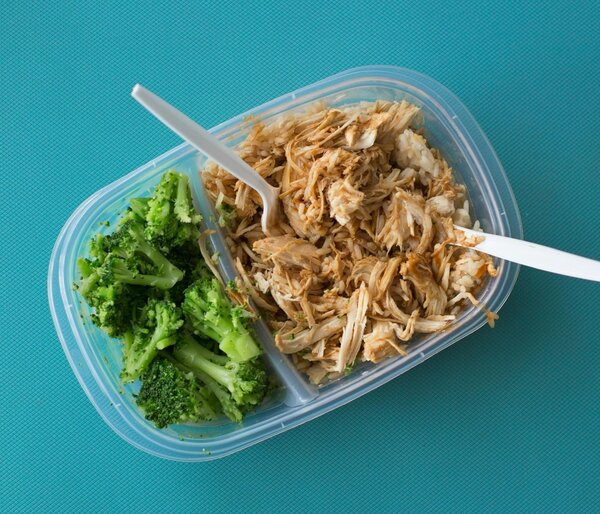 When I was overweight, I had a fundamental problem with how I viewed food.
I saw my meals as an opportunity to feel good, not a necessity to function.
That’s why I wanted my food to taste as good as possible and why I wanted to eat as much as possible. I wanted as much of the good feelings as I could take.
I’ve obviously learned since that my perspective was flawed. Viewing food primarily as a reward or mood enhancer is incredibly dangerous. That mindset leads to obesity, heart disease, and so many more preventable conditions.
We have to train ourselves to view food primarily as an energy source instead. The energy provided by food is needed to function, but too much of it can make you “blow a fuse”.
Calories are not a measurement nutritionists invented out of the blue. A calorie, as explained in my engineering classes back in the day, is simply a measure of energy. And most of us consume enough of that energy well before we feel full.
To get a feel for how much energy you really need each day, you can use a Total Daily Energy Expenditure (TDEE) calculator. The calculator will use your current stats to determine your calorie needs. From there, you can see how much energy you should consume to lose weight if you want, or you can just maintain using your current baseline.
You can also get a rough estimate of calorie needs by multiplying your bodyweight in pounds by 14. I’m 175 pounds now for example, so 175 x 14 puts me around 2400 calories. That’s the daily limit for me to eat if I want to stay at my current weight.
I know people don’t like crunching numbers this way, but in general, your relationship with food really does come down to an equation. So if you want more control over your consumption, treat it as part of a formula instead.
Tip 2: Remember delicious food is not scarce
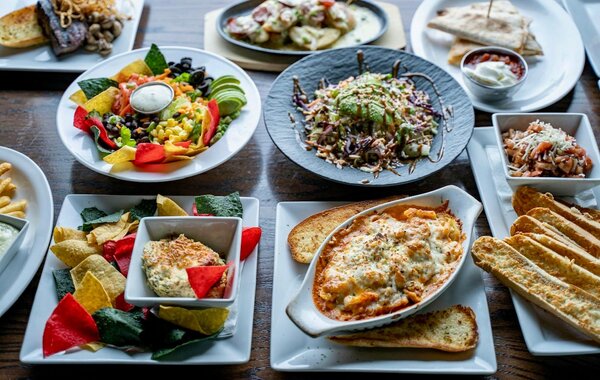 Your mindset about food changes drastically depending on how abundant it is in your environment.
If you struggle with overeating in the U.S. for example, chances are you don’t know how it feels to need food. Food is always available to you. The biggest concern you have is if you feel enough hunger compelling you to eat it.
Despite the abundance of food in our environment though, many of us treat good food like we’ll never see it again.
- Our coworkers bring donuts to the office and we have to grab three.
- We see an ad for all-you-can-eat-pancakes and rush to the diner.
- A phone notification for a fast-food deal makes us throw lunch plans out the window.
The idea of getting something tasty for cheap appeals to our basic need for survival. The problem is, help isn’t required for most of us to meet that need.
Many of us have fridges stocked with food we’ll never eat. And despite clever marketing, we know nearby restaurants have “limited” deals all the time.
Saying “no” to an opportunity doesn’t mean you won’t see it again. You have endless options to choose at almost any time, so don’t eat to avoid missing out.
Tip 3: Build meals around lean protein instead of inefficient foods
What you eat has a huge effect on how much you eat.
Foods like candy, chips, and soda lead to overeating because they aren’t nutrient dense. Your body won’t feel satisfied by those foods alone unless you eat them in crazy volumes.
Foods like those made of mostly sugar and simple carbs are inefficient—they provide energy quickly without making you feel full. If your goal is to stop overeating though, you need foods that do the opposite.
Protein is the best macronutrient to fill this role. Lean protein sources have lower calories per gram and help you feel satisfied before consuming too much energy.
How do you know if your food is a good source of lean protein?
All it takes is a quick glance at a nutrition label.
Look at the total number of calories per serving and then check the total grams of protein. If the total number of calories is less than 10x the grams of protein, that food is a good source of lean protein.
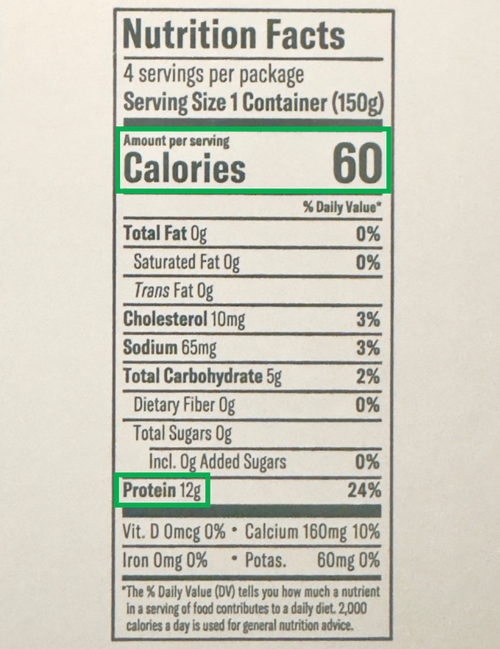
Foods like chicken breast, tuna, shrimp, turkey, and Greek yogurt are excellent lean protein sources. Some types of beans, tofu, and protein powders are also good options for vegetarians and vegans.
Planning meals around foods like those will make it easier to stay disciplined. You can then round out your meals with veggies, fruits, and complex carbs to provide other nutrients while keeping calories under control.
Once you’re used to doing this with your own food, you can do the same thing to guide choices elsewhere. If you’re at a cookout for example, go for the grilled chicken instead of loading up on mac n cheese.
Making choices like this will help you avoid overly fatty and sugary foods. You won’t be inclined to overeat then because your satisfaction will align with consumed energy.
Tip 4: Make the least bad decision if you don’t make the healthy one
 No one is capable of eating perfectly portioned chicken breast and broccoli with a jug of water each meal. There will be times when you want something else, and that something won’t always be “healthy”.
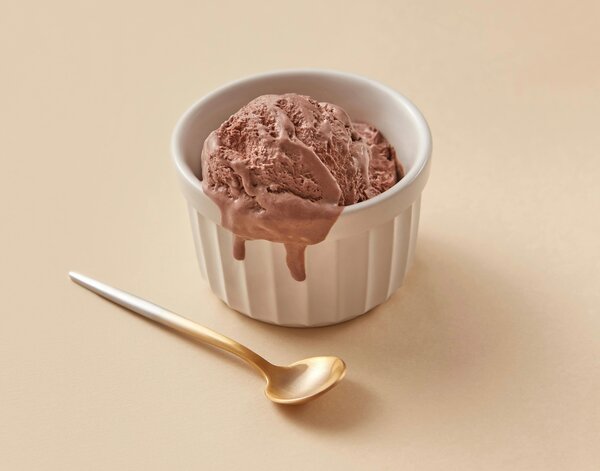
It’s okay to make choices like that. Just don’t let the choice become a full-blown spiral. Having ice cream after dinner is fine for example. Eating the whole tub is not.
You don’t want to stack poor food choices like that. Doing so is how you turn inconveniences into calorie monsters.
Instead, put limits on how “bad” you’ll be.
If you’re still looking at dessert for example, go ahead and have cake, but pass on eating it à la mode. Maybe you’re tired of water and want a more flavorful drink. Slurp a zero-sugar soda instead of the real deal.
Many restaurants also show (dubious) calorie counts on their menus now too, so you can at least make an informed decision instead of picking entrees worth double the calories.
The point here is to give yourself grace but not let yourself off the hook completely.
Making healthy choices all the time isn’t sustainable, but make sure your “bad” choices are as good as can be.
Tip 5: Set consistent mealtimes to prevent unplanned, emotional eating
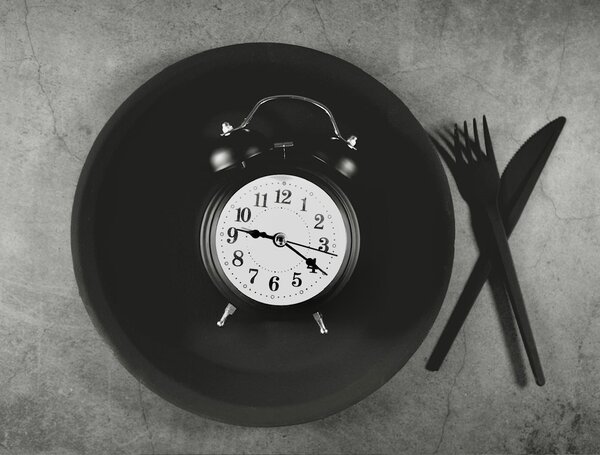 Intermittent fasting is one of the best strategies I’ve used to stop overeating. Nothing about the method itself is all that special though. The biggest benefit for me is the structured eating.
In my form of intermittent fasting, I usually don’t eat until 11 AM and stop eating by 6 PM. This means I only eat two total meals with the first around noon and the other in the evening.
This works for me because I would use a third meal as an opportunity to overeat. I’m not the kind of person who can eat a cream cheese bagel in the morning and be good—that would be a tease to me and I’d crave more. Having two larger meals works for me though and is much more satisfying.
My intermittent fasting schedule may not be for everyone, but having consistent and structured meals should be. You need to define specific mealtimes and avoid calories outside those boundaries to limit unplanned, emotional eating.
All the “small” additions to your planned meals add up. The loaded coffee you think you need in the morning and the buttery popcorn you squeeze in at night count toward your calorie total too.
You want to cut those extra snacks you eat on a whim—not because there’s anything wrong with snacks themselves, but because they need to be planned in your routine.
Tip 6: Focus on your routine, not outlier days
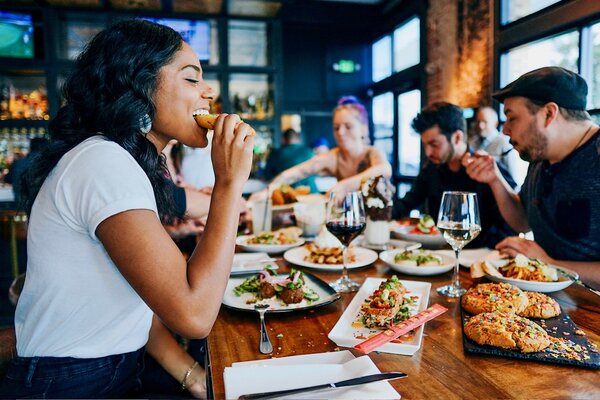 Consistent habits have a much higher health impact than one individual day, so don’t beat yourself up if you slip now and then.
There’s no need to overthink what you eat during a holiday or any other special occasion. Accept the fact that you want to enjoy yourself during those times because they really are rare.
A healthy relationship with food is one that’s sustainable, so if you overdo it one day, show yourself grace and hop back on track the next. You don’t need to punish yourself for missing a target. You just need the maturity to not let it ruin you.
Almost everyone overeats on Thanksgiving, Christmas, and birthdays. That doesn’t make us failures, it makes us human.
I said earlier that we should view food primarily as an energy source. That’s because we can’t remove all emotional attachment to it.
I’ll be the first to tell you I still love food. And I still have random days when I clear out the fridge because I just feel like eating. If you look at my habits as a whole though, those days are few and far between.
Try to make your routine look similar. Chain so many good days together that the bad ones are an anomaly. That’s how you’ll make sustainable progress.
Discipline yourself during those normal, boring days so you can occasionally indulge without guilt.
How to Stop Overeating: A Quick Review
To summarize, here are my 6 tips on how to stop overeating:
- View meals as a necessity to function, not an opportunity to indulge
- Remember delicious food is not scarce
- Build meals around lean protein instead of inefficient foods
- Make the least bad decision if you don’t make the healthy one
- Set consistent mealtimes to prevent unplanned, emotional eating
- Focus on your routine, not outlier days
I still remind myself of these lessons daily to stay disciplined. I encourage you to do the same.
Our inclination to overeat isn’t something we can turn off with the press of a button. Fighting it is a daily commitment to making right choices regardless of how we feel. These lessons are extra tools to help you win that daily battle.
Let me know how these tips work for you, and if you have any others you’ve found useful, I’m sure everyone here would love if you shared.
-Drew
Leave a Reply