 Once saved, always saved.
Yes, it’s actually true.
While this belief appears to be heresy, those who deny it typically oppose a straw man. They denounce the idea of a one-time decision overriding anything a professing Christian will later do.
This idea, however, is not what I’m here to defend.
To clarify, I’m saying a true Christian will never lose their salvation—regardless of how heretical that may still sound to some.
A person who believes the Bible’s message will never fully turn away from the faith, and there is an overwhelming amount of Scripture supporting this fact.
The Bible presents four high-level reasons why “once saved always saved” is true. I’ll explain each reason here so you can also see this controversial belief as the truth it is.
4 Biblical Reasons Why “Once Saved Always Saved” Is True
Reason 1: Jesus Said It Was True

…whoever drinks of the water that I will give him will never be thirsty again. The water that I will give him will become in him a spring of water welling up to eternal life. (John 4:14 ESV)
While the phrase “once saved always saved” isn’t found in Scripture, the concept as defined above is plastered throughout its pages.
One place where we especially see the concept is in the words of Jesus Himself. John’s Gospel in particular contains many verses of Jesus saying His followers will never be lost. Perhaps the most definitive though is in the following passage:
My sheep hear my voice, and I know them, and they follow me. I give them eternal life, and they will never perish, and no one will snatch them out of my hand. My Father, who has given them to me, is greater than all, and no one is able to snatch them out of the Father’s hand. (John 10:27-29 ESV)
Here, Jesus describes His people as sheep He knows, and they follow Him. He says He gives them eternal life in the present day, not just in Heaven where “they will never perish”. Then, the biggest support for “once saved always saved” follows: “and no one will snatch them out of my hand.”
Jesus not only supports the truth of this concept, He says He has the power to ensure its fulfillment.
He then explains how God the Father gave those followers to Jesus, and how He also has the power to keep them from losing salvation.
Jesus told how both He and God the Father ensure whoever is saved, is always saved—a concept known as “eternal security”.
Jesus described the same ideas of not casting out His followers or losing them in John 6:37-39. He also described eternal life as a gift already in the Christian’s possession multiple times (John 5:24, John 6:47).
Jesus Himself clearly taught a believer’s salvation is always secure. There is no greater authority to convince us otherwise (Matt. 28:18, Phil. 2:9 NIV).
Reason 2: God’s Choice Can’t Be Overruled

For the gifts and the calling of God are irrevocable. (Rom. 11:29)
Your belief in eternal security depends heavily on your view of salvation. Unfortunately, the most popular view of Christian salvation is incomplete at best.
Scripture tells us that Christians were saved by God’s grace and mercy, not by any good things we have done (Eph. 2:8-9 ESV, Titus 3:4-5). Despite agreeing with that fact and even singing about it in church though, many professing Christians don’t actually believe it in practice. To them, their faith in Jesus was something they conjured up on their own.
People talk about choosing Christianity as if it’s something they bought at the store and can return any time, but this is not how Scripture presents salvation.
The Apostle Paul summarized how salvation really works in a passage from his letter to the Ephesians:
…He chose us in Him before the foundation of the world, that we should be holy and without blame before Him in love, having predestined us to adoption as sons by Jesus Christ to Himself, according to the good pleasure of His will (Eph. 1:4-5)
Paul writes that God chose people in Christ before the world was created and predestined those people to become Christians. This choice was not made based on anything we did—we weren’t even born at the time—or any decision we’d make in the future. The choice was made “according to the good pleasure of [God’s] will”.
The ultimate reason why anyone becomes a Christian is because God chose them to become one (2 Thess. 2:13-14, 2 Tim. 1:9, Rom. 9:16).
I explained this truth in detail in an article called How You Really Become a Christian: Destiny’s Role Explained. I encourage you to read that post to see more biblical support for the statement above since it’s too much to include here. The point to understand now though is the difference between the popular view of salvation and what Scripture actually describes:
- Incomplete view: People choose to be saved through faith in Jesus Christ. (This is how it looks from our perspective but it’s not all that happens.)
- Biblical view: God chooses people to be saved through faith in Jesus Christ.
God’s choice is why the Bible distinguishes between believers and the elect—people chosen by God for salvation. Every believer, or Christian, is a member of the elect, but not all the elect are currently Christians (see 2 Tim 2:10).
Because of the certainty of God’s choice and His power to enact His will, however, we can say with confidence that those elect who don’t yet believe will receive eternal life too. Once they are saved, they will always be saved because God is the Person who predestined it (Rom. 8:29-30, Eph. 1:11).
This is why Paul explains that nothing in creation—not even ourselves—will be able to separate us from God’s love:
For I am sure that neither death nor life, nor angels nor rulers, nor things present nor things to come, nor powers, nor height nor depth, nor anything else in all creation, will be able to separate us from the love of God in Christ Jesus our Lord. (Rom. 8:38-39 ESV)
God is not a liar, and He finishes what He starts (Titus 1:1-2 NIV, Phil 1:6 ESV). That’s why anyone who’s saved by Him will stay saved forever (Jude 24-25).
Reason 3: The Holy Spirit Guarantees Salvation

By this we know that we abide in Him, and He in us, because He has given us of His Spirit. (1 John 4:13)
You can’t deny “once saved always saved” without treating the Holy Spirit with near-blasphemous levels of contempt.
This is another case where professing Christians say they believe a biblical teaching but disregard it in practice—most likely because we can’t actually see the Holy Spirit. Scripture clearly teaches, however, that the Spirit is given to believers at the moment of their salvation:
And you also were included in Christ when you heard the message of truth, the gospel of your salvation. When you believed, you were marked in him with a seal, the promised Holy Spirit, who is a deposit guaranteeing our inheritance until the redemption of those who are God’s possession—to the praise of his glory. (Eph. 1:13-14 NIV)
Paul explains here that believers are included “in Christ” when they hear the truth of the gospel and believe the message. At that point, they receive the Holy Spirit who acts as a “seal” and a “deposit” that guarantees the future promises of salvation (also see 2 Cor. 1:22 ESV, 2 Cor. 5:5 NIV).
Along with being this guarantee of future promise, the Holy Spirit also births us into God’s family upon receipt:
For those who are led by the Spirit of God are the children of God. The Spirit you received does not make you slaves, so that you live in fear again; rather, the Spirit you received brought about your adoption to sonship. And by him we cry, “Abba, Father.” The Spirit himself testifies with our spirit that we are God’s children. (Rom. 8:14-16 NIV; also see John 1:12-13 ESV)
Once you’re born into God’s family, you can’t undo that change. It would be like a son telling his father they aren’t related anymore—the impossibility of that statement would be ridiculous.
The Holy Spirit’s indwelling is one of the biggest differences between the Old and New Covenants in the Bible.
The Old Covenant—or Testament—between God and Ancient Israel required the Israelites to follow the Mosaic Law, and if they did, they would live and prosper (Deut. 30:15-18). So why does history show that Israel repeatedly failed to honor their side of the deal (2 Kings 17:15, Neh. 9:26, Jer. 7:24, Jer. 11:10, Hosea 8:1, Amos 2:4)?
Was it because they weren’t smart? Was it simply because they didn’t do enough to stay faithful?
No.
The real answer points to a truth about human agency.
The prevailing belief in the world today is that people have free will and make choices independent of any unseen influence. So when they see the Bible, a book filled with various commands and rules, they assume they just need to follow those rules to be a “good person”. But here’s what people who think like this don’t understand:
Scripture often gives commands with the apparent premise of free will while explaining elsewhere why your will isn’t actually free.
The Mosaic Law, for example, was never meant to make Israel—or any of us—good people. The purpose of the Law was to show that our agency is limited by sin (Rom. 3:20 NIV). It wouldn’t have mattered if the Old Covenant was made with Russia, America, China, or Egypt. Any nation would have failed because of the unseen influence of our sin nature (see Rom. 7:14 NLT, 1 John 1:8, Mark 7:20-22).
This is why the author of Hebrews writes:
For if that first covenant had been faultless, then no place would have been sought for a second. Because finding fault with them, He says:
“Behold, the days are coming, says the Lord, when I will make a new covenant with the house of Israel and with the house of Judah—not according to the covenant that I made with their fathers in the day when I took them by the hand to lead them out of the land of Egypt; because they did not continue in My covenant, and I disregarded them, says the Lord. For this is the covenant that I will make with the house of Israel after those days, says the Lord: I will put My laws in their mind and write them on their hearts; and I will be their God, and they shall be My people. (Heb. 8:7-10; cf. Jer. 31:31-34)
The author describes how the Old Covenant was flawed, not because of God who was and is always faithful, but because of the people affected by sin. He quotes the prophet Jeremiah to show that God recognized this flaw and planned a New Covenant where Israel—and believers from any nation (Rom. 9:25-26)—would have God’s laws placed “in their mind” and written “on their hearts”.
This New Covenant is better than the Old because God works within believers to shape even their own will (Phil. 2:13 ESV).
A similar prophecy from God in Ezekiel makes it even clearer how much of an effect the Spirit has on a believer:
And I will give you a new heart, and a new spirit I will put within you. And I will remove the heart of stone from your flesh and give you a heart of flesh. And I will put my Spirit within you, and cause you to walk in my statutes and be careful to obey my rules. (Ezekiel 36:26-27 ESV)
Does that sound like a Person leaving even your own obedience up to you?
This act of regeneration actually frees our will (2 Cor. 3:17 NIV). The Holy Spirit makes us sensitive to God’s commands and gives us the will and power to do them.
Anyone who’s saved has this benefit, and they will always have it forever.
Objection: “But What About the Warnings?!”
 This is usually the point where “once saved always saved” deniers present objections.
Yes, they admit the Holy Spirit is a huge benefit for Christians, but they can’t reconcile that with Scripture’s repeated warnings against leaving the faith (aka, apostasy).
A few passages in the New Testament seem to imply that people with the Spirit can still turn away, and by extension, lose their salvation. I can’t cover all those passages here, but the popular one below comes from Hebrews chapter 6:
For it is impossible, in the case of those who have once been enlightened, who have tasted the heavenly gift, and have shared in the Holy Spirit, and have tasted the goodness of the word of God and the powers of the age to come, and then have fallen away, to restore them again to repentance, since they are crucifying once again the Son of God to their own harm and holding him up to contempt. (Heb. 6:4-6 ESV)
(Note: Trusted Christian scholars have interpreted these verses different ways. I’ll explain the view here that appears to be most likely.)
The author here describes people who “have shared in the Holy Spirit”, as only true believers do, and yet still fall away, or apostatize. The author says it is impossible to “restore them again to repentance” because they essentially say Jesus’ sacrifice wasn’t enough, and in doing so, they are “holding him up to contempt”.
This warning is actually flanked by two others that are often used to deny eternal security. The earlier one in chapter 3 says:
Take care, brothers, lest there be in any of you an evil, unbelieving heart, leading you to fall away from the living God. But exhort one another every day, as long as it is called “today,” that none of you may be hardened by the deceitfulness of sin. For we have come to share in Christ, if indeed we hold our original confidence firm to the end. (Heb. 3:12-14 ESV)
This warning involves caution about “an evil, unbelieving heart” that will cause a Christian to leave the faith. Christians are expected to work together to ensure none are “hardened by the deceitfulness of sin”. And the author concludes this warning by saying we are truly saved “if we hold our original confidence firm to the end”.
Finally, the later warning in chapter 10 says:
For if we go on sinning deliberately after receiving the knowledge of the truth, there no longer remains a sacrifice for sins, but a fearful expectation of judgment, and a fury of fire that will consume the adversaries. (Heb. 10:26-27 ESV)
The author says if we intentionally keep sinning after being saved—that is, “receiving knowledge of the truth”—we can only expect judgment from God.
These are all very sober warnings, and on initial reads, they appear to deny that a Christian once saved is always saved since they portray what happens if believers turn away.
These warnings, and similar verses elsewhere, are used by “once saved always saved” deniers to reject all the biblical support showed above, but those who do this overlook a huge logical point:
The existence of a conditional statement does not assure its condition(s) will be met.
If I say, for example, you’ll break your leg if you jump from a third story window, I am telling the truth. But if you are in your right mind and value your health accordingly, you’ll never meet that condition in practice.
Going back to the three warnings above, you’ll see each of them has a primary offense:
- “holding [Jesus] up to contempt” (Heb 6:6 ESV)
- having “an evil, unbelieving heart” (Heb 3:12 ESV)
- “[going] on sinning deliberately” (Heb 10:26 ESV)
Each of these offenses are linked to apostasy, but here’s the good news:
The Holy Spirit addresses all of them.
- Instead of “holding [Jesus] up to contempt”, the Spirit testifies of Jesus, and ensures we show Him proper reverence (John 15:26, 1 Cor. 12:3)
- Instead of having “an evil, unbelieving heart”, the Spirit circumcises our hearts so we can love God and live (Rom. 2:29 NASB, cf. Deut. 30:6)
- And instead of “[going] on sinning deliberately”, the Holy Spirit ensures we “cannot keep on sinning” (1 John 3:9 ESV, 1 John 5:18 NIV)
The Spirit Himself is our guard against apostasy too (see Matt. 24:24). That’s why perseverance is best understood as the effect of salvation, not its cause.
Faithfulness is included in the fruit of the Spirit after all (Gal. 5:22-23). And being faithful to the end is a sign of the Holy Spirit’s presence, not simply a test of how well we perform.
Reason 4: Visible Faith Isn’t Always Saving Faith
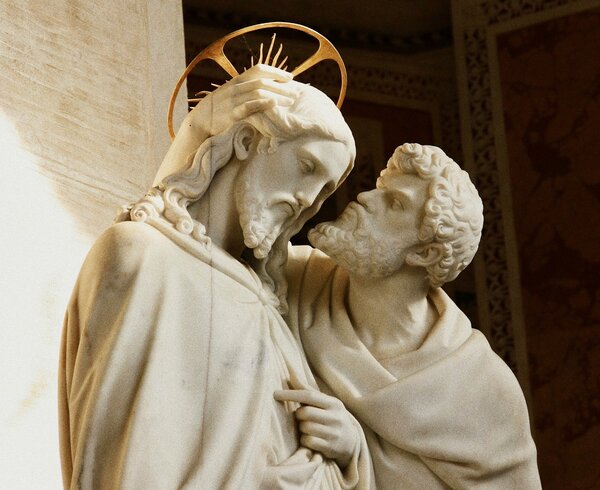
Not everyone who says to Me, ‘Lord, Lord,’ shall enter the kingdom of heaven… (Matt. 7:21)
Just as Paul wrote that not all Israel are Israel, not all “Christians” are Christians.
A true Christian is one inwardly, not just in appearance (see Rom 8:9 NLT). None of us have God’s omniscience though—that is, His ability to know everything about everyone (see 1 Sam. 16:7)—so it can be tough to know who’s genuine.
What I’ve shown with Scripture so far, however, is that true Christians never permanently leave the faith. This then leaves only two scenarios when people turn from Christianity:
- They disobey temporarily but will later be restored
- They turn away for good because they never believed at all
There are no examples of true Christians turning fully from Christ in the Bible, but there are multiple examples of people who fit the categories above.
We actually see an example of each among Jesus’ closest followers:
- Peter, who denied Christ temporarily
- Judas, whose betrayal was permanent
Both of these disciples betrayed Jesus in some way, so why is Judas remembered as the traitor while Peter is still known as a rock?
The difference is in their faith.
Judas’ betrayal is so familiar to us that it’s part of popular culture, but because of this, we often forget who he really was. Judas wasn’t a faithful believer who made a bad decision one night. Scripture is clear that he never believed (John 6:64, John 6:70-71, John 13:10-11), and his hidden status as a liar and a thief proved it (John 12:5-6 NIV).
Judas may have looked like the other 11 disciples and shared in the work they did, but his eventual act of leaving was confirmation of who he always was (see 1 John 2:19).
Now what about Peter?
Peter denied Christ three times after claiming he never would (Matt. 26:33-34, Matt. 26:73-74), and his actions didn’t always align with Jesus’ will (Matt. 16:22-23, John 18:10-11). The difference between him and Judas, however, is apparent in the passage below:
“But what about you?” [Jesus] asked. “Who do you say I am?” Simon Peter answered, “You are the Messiah, the Son of the living God.” Jesus replied, “Blessed are you, Simon son of Jonah, for this was not revealed to you by flesh and blood, but by my Father in heaven. (Matt. 16:15-17 NIV)
Peter had the gift of faith from God as shown by his confession of Christ’s identity. And this faith later blossomed in Peter despite the temporary failings he had.
Judas was a tare that grew alongside the wheat of Peter, but only Peter was the good ground where the seed of the gospel took root (see Matt. 13:3-9, Matt. 13:18-23; Matt. 13:24-30, Matt. 13:36-43).
The Bible’s warnings from earlier are good because they test for the saving faith of Peter instead of only the visible faith of Judas (see 2 Cor. 13:5 NIV). This is crucial since visible faith alone won’t endure.
Every time I read a story from someone who “left” the faith, I’m reminded of that fact. Those stories never come from people who believed Jesus is God in the flesh who died as a substitute for them on the cross. The extent of their faith was growing up in church, learning Scripture’s rules, and being familiar with Christian culture—all things that look like faith externally but can’t save.
These people may have expressed a vague belief in God, but since they didn’t know the real One He sent, they were never truly a Christian (John 6:28-29, John 17:3, 1 John 2:23).
Their stories show how not recognizing the “bread of life” leads to unsatisfied hunger (John 6:35). That’s why the Church needs to be specific with our message.
“Once saved always saved” requires you to actually be saved. And people don’t get saved unless they’re exposed to the truth (Rom. 10:14).
If we don’t present the real message of salvation, we put our hearers at the biggest risk of apostasy. But if we present the truth of Jesus’ words, His sheep will hear His voice (John 10:27).
No, they won’t be perfect. None of us will until we get all that we’re promised (Phil. 3:20-21 ESV, 1 John 3:2, 1 Cor. 15:49).
But if their faith is genuine, that promise will never be denied (Heb. 10:23).
Why “Once Saved Always Saved” Is True: A Summary
 So that, my friend, is why “once saved always saved” is true.
To recap, here are the four biblical reasons why:
- Jesus Said It Was True
- God’s Choice Can’t Be Overruled
- The Holy Spirit Guarantees Salvation
- Visible Faith Isn’t Always Saving Faith
God doesn’t want us to doubt our salvation, but in order to gain peace on this matter, we need to confirm we’ve actually received His gift, so examine yourself here to be sure:
- Do you believe Jesus is God in the flesh?
- Do you believe His sacrifice alone was enough to give you eternal life?
If you believe those facts, then you are saved (John 3:16, Rom. 10:9)—not simply because you chose to believe, but because God opened your eyes to the truth (John 6:44). And since He took the initiative to save you, He will carry His work through to the end.
Now, for those of you who still deny “once saved always saved”, what is your reason for doing so?
- Are you trying to prove God isn’t strong enough to do what He said He would do?
- Are you afraid people who actually have God’s Spirit inside them will fully detach from their Father?
- Are you clinging to verses that provide practical guidance when Scripture makes the overarching theology clear?
I challenge you to examine your motives and see why you really oppose this belief. True Christians aren’t looking for reasons to sin (Rom. 6:1-2, Rom. 6:17-18 NASB), so please don’t let that be your only argument.
The doctrine of eternal security should give all believers peace—not contention, doubts, or excuses.
Jesus died once so we could be saved forever (Heb. 10:14). And yes, that message is almost too good to be true.
-Drew
Leave a Reply